Phase Change
The moon pulls and I am drawn towards it. My mind lives on the moon — at the heart of this story, both familiar and unknowable, ethereal. The printer translates images of the moon into the molten glass, and the artwork asks to be orbited: the images appear and disappear, seen first and then comprehended. I make the moon out of glass.
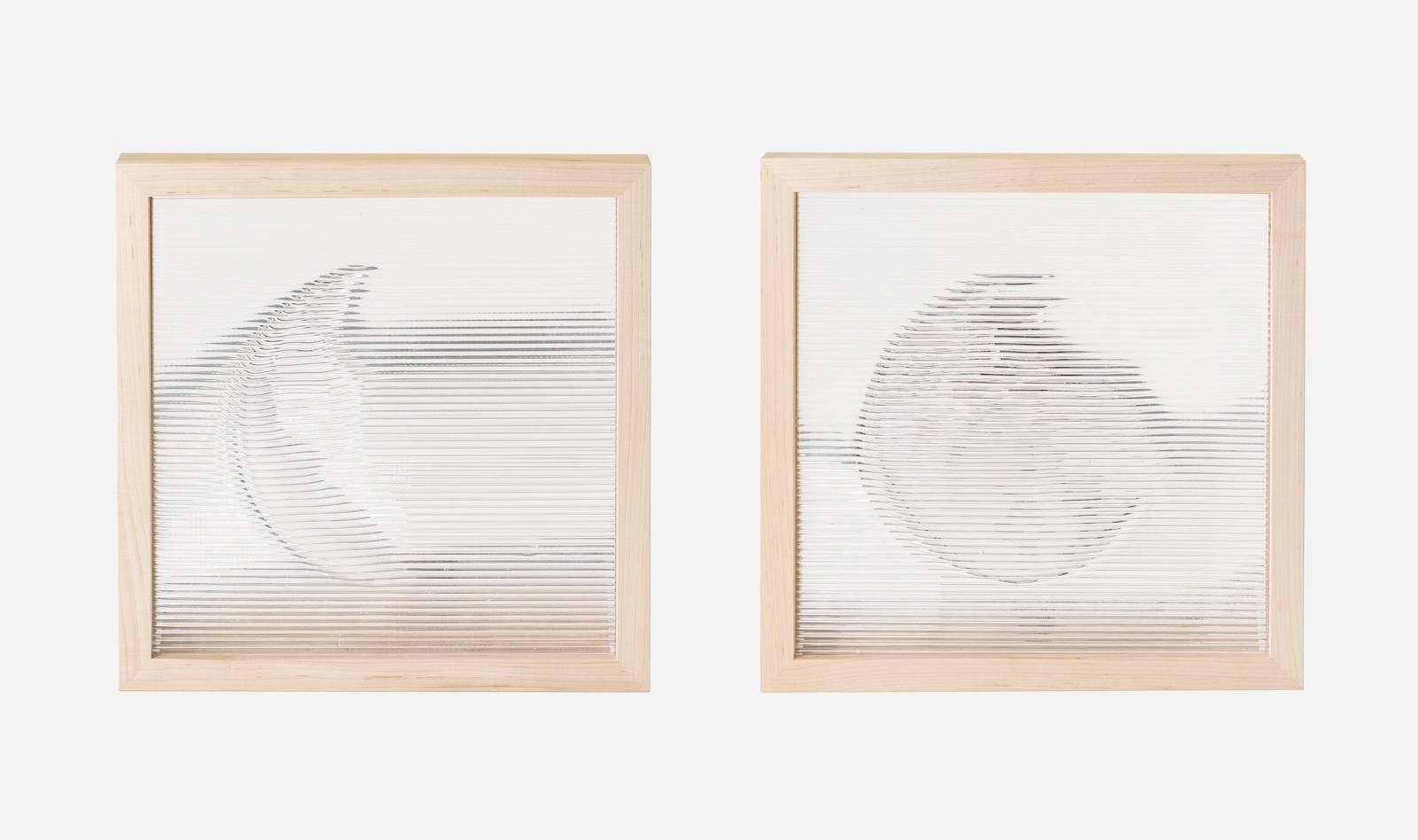
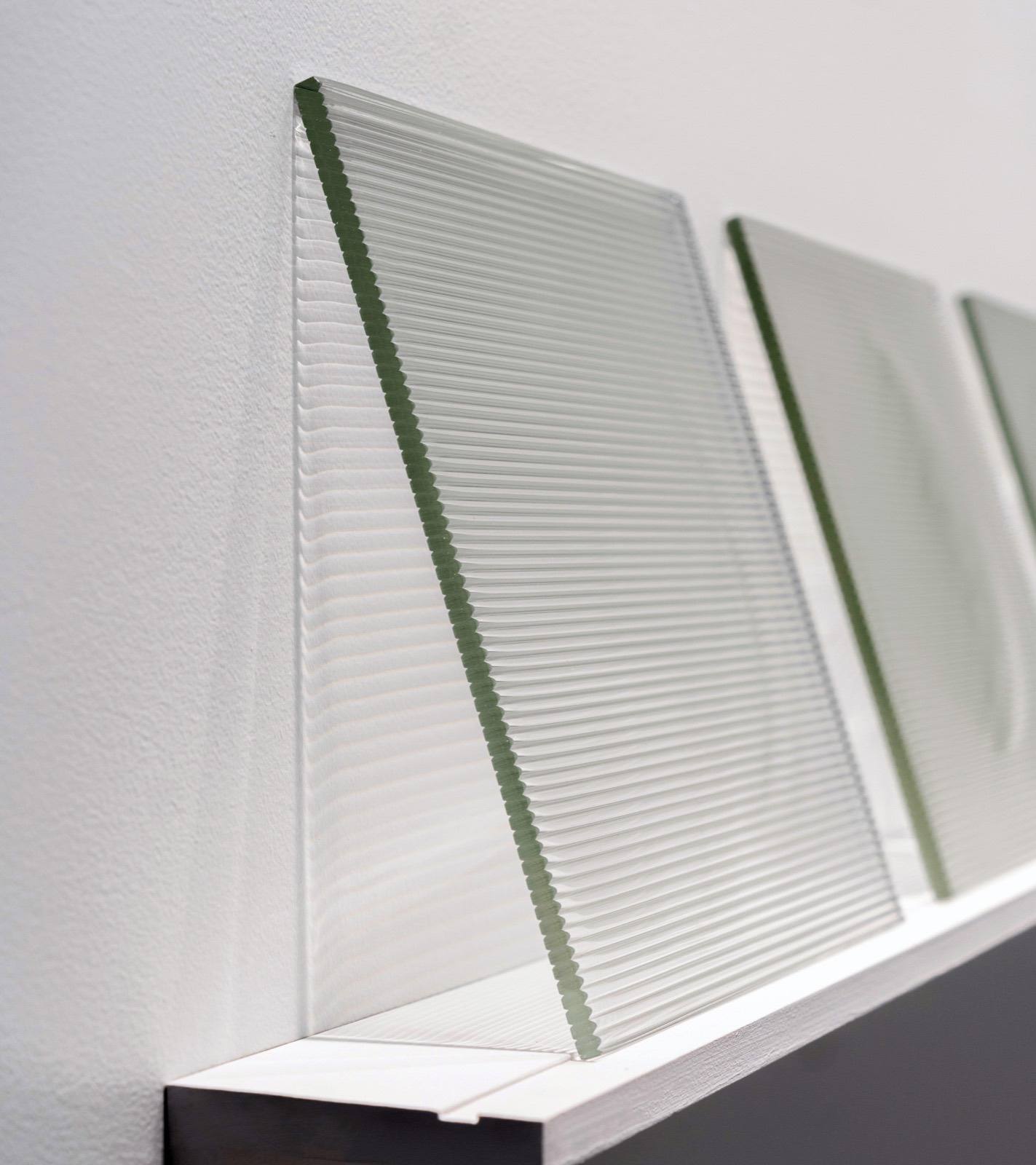
For Phase Change I wrote an algorithm that takes a grayscale image and translates each gray value as a number, and that number into a speed. When the printer moves faster the glass forms a thinner wall; when it moves slower, a thicker one. Gray values become instructions about speed, and the result is a solid glass wall of varying thickness. Lit through, the thin passages glow and the thick ones hold their dark: the wall gives the picture back.
The printer holds glass at more than 2000°F. It flows out through a ceramic nozzle, one line at a time. I write the path it follows: where to go, how fast, how hot. The nozzle traces that path, leaving a bead of glass behind it, and the object grows layer by layer.
When a print is done, we cut it free from the stream. It comes off the machine close to 900°F and goes into another chamber to cool overnight.
None of this replaces glassblowing. It builds on it. People have been forming glass for thousands of years. This is one more way to do it: material, machine, and the person running both.