Measured Failure
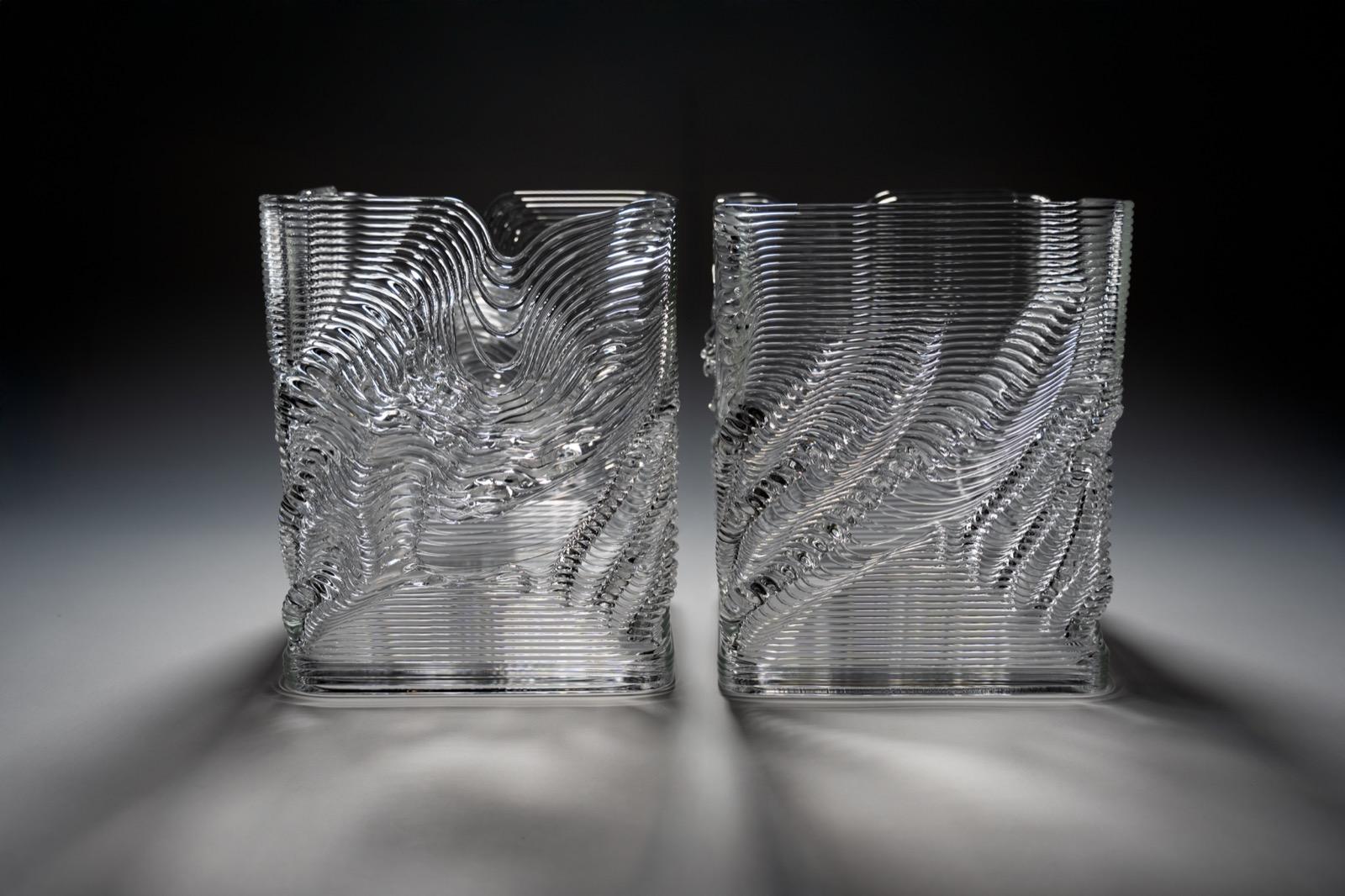
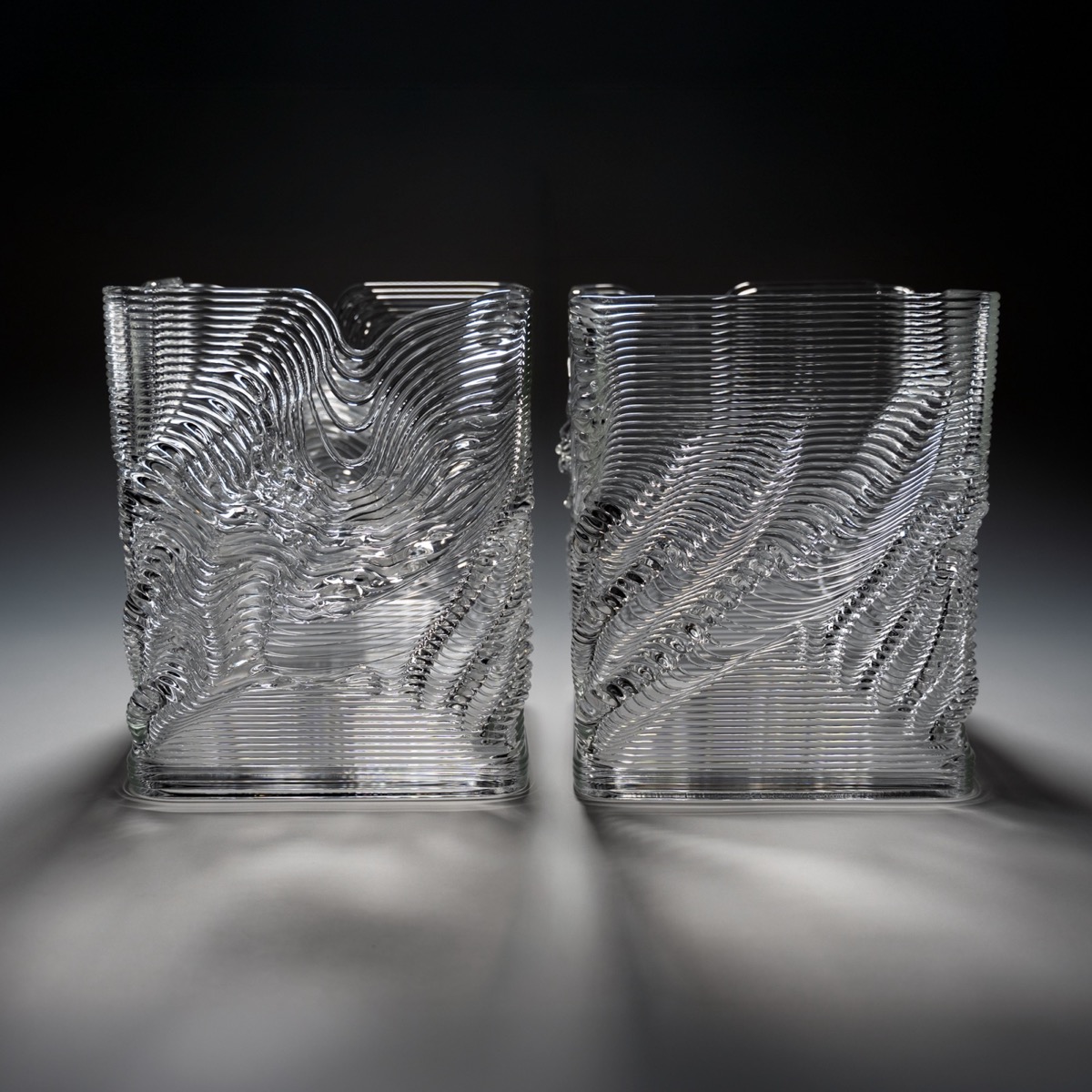
Measured Failure is a study of a system held at the edge — the print manually pushed past its stable limits, and how the glass responded to it.
As the glass prints, I manually adjust the speed of the machine, pushing the process beyond its stable limits. The print begins to shift. Bulges form. Threads stretch. The object and program diverge. What's left is more — something I couldn't have designed. I adjust again, sometimes hunting for new behaviors, other times watching how the glass pulls itself back. The work records this: what the machine was told to do, and what the glass was willing to become.
The printer holds glass at more than 2000°F. It flows out through a ceramic nozzle, one line at a time. I write the path it follows: where to go, how fast, how hot. The nozzle traces that path, leaving a bead of glass behind it, and the object grows layer by layer.
When a print is done, we cut it free from the stream. It comes off the machine close to 900°F and goes into another chamber to cool overnight.
None of this replaces glassblowing. It builds on it. People have been forming glass for thousands of years. This is one more way to do it: material, machine, and the person running both.